PaneFright presents itself as a focused Halloween-projection store, with listings for a window projector, a free-projector offer, a scene vault and warranty coverage. The presentation is straightforward, but our investigation found a significant transparency gap: panefright com was registered only on August 3, 2026, less than two weeks before our evidence was collected on August 16. The supplied contact evidence names PANEFRIGHT but does not identify a separate legal company, business location or accountable individual. That does not establish wrongdoing, but it leaves buyers with little operating history or independently verified reputation to examine before placing an order.
Quick Verdict
PaneFright is a very recently registered specialist store with identifiable product pages and a stated 30-day guarantee, but its short domain history, limited operator details and unavailable independent reputation checks make it insufficiently established. Buyers should verify the complete price, payment protection and written return terms before ordering.
Why panefright com prompted a closer review
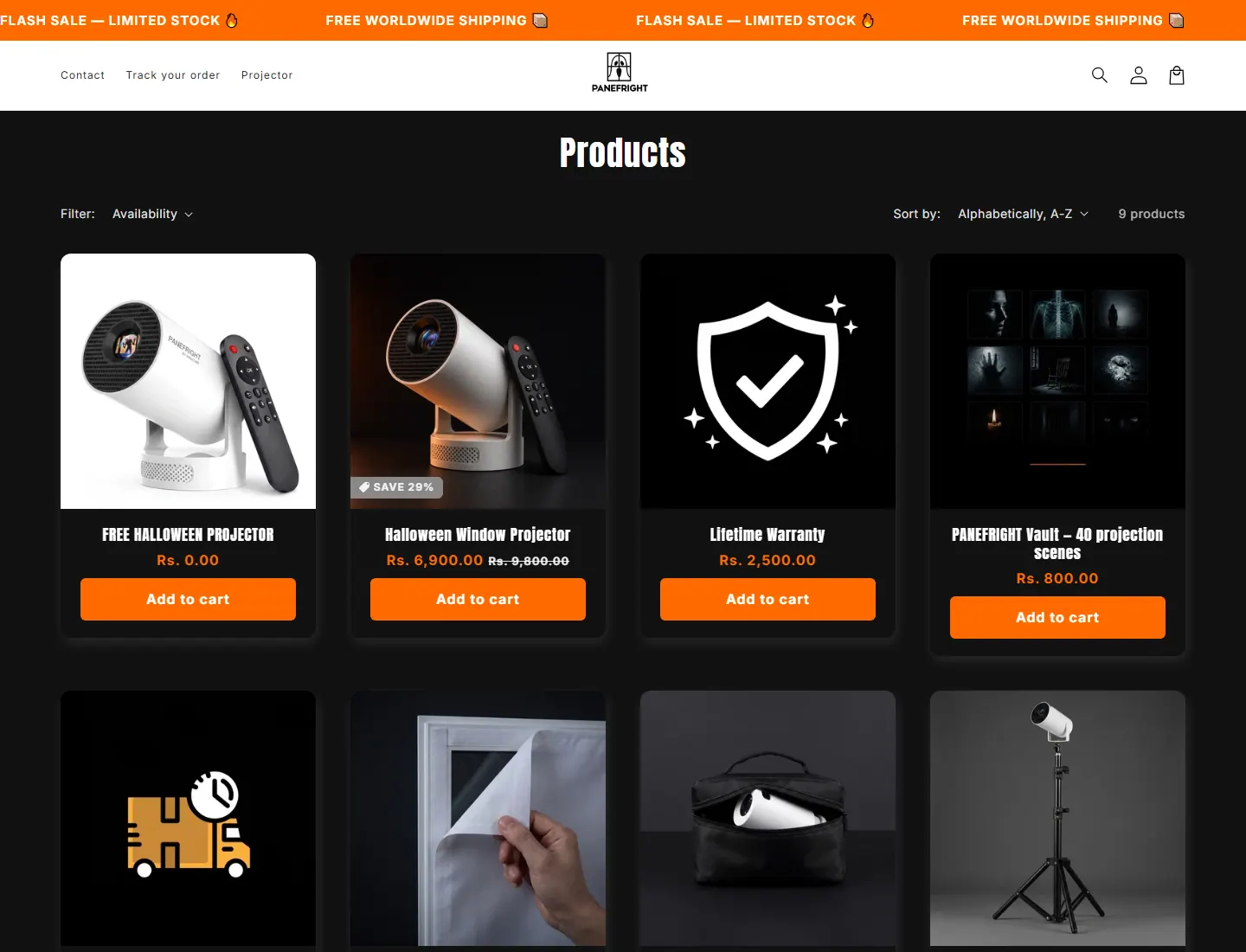
The seller’s catalogue revolves around Halloween projection products. Pages collected on August 16, 2026, included a “Halloween Window Projector,” a “FREE HALLOWEEN PROJECTOR,” a “Lifetime Warranty,” and the “PANEFRIGHT Vault — 40 projection scenes.” The all-products collection and shopping-cart pages were also accessible in the supplied evidence.
Those pages show that PaneFright has more structure than a single unsupported advertisement. They do not, however, independently prove stock ownership, fulfilment capacity, product performance or customer-service reliability. “Free” can also depend on conditions that are not represented in the evidence ledger, so buyers should inspect the final cart total and every attached obligation rather than interpreting the headline as a no-cost transaction.
Our separate Uproot Clean online-store review illustrates why a product-focused storefront should be assessed through its policies and traceable identity as well as its marketing. For PaneFright, that closer check is particularly important because the domain had almost no history when the evidence was gathered.
Products, discount and guarantee claims
The main projector page displayed “SAVE 29%” on August 16, 2026. This is a seller-displayed discount claim, not an independently confirmed market saving. The ledger does not provide the underlying reference price, final checkout amount, bundle conditions or a comparison with equivalent products, so our review cannot verify the economic value of that percentage.
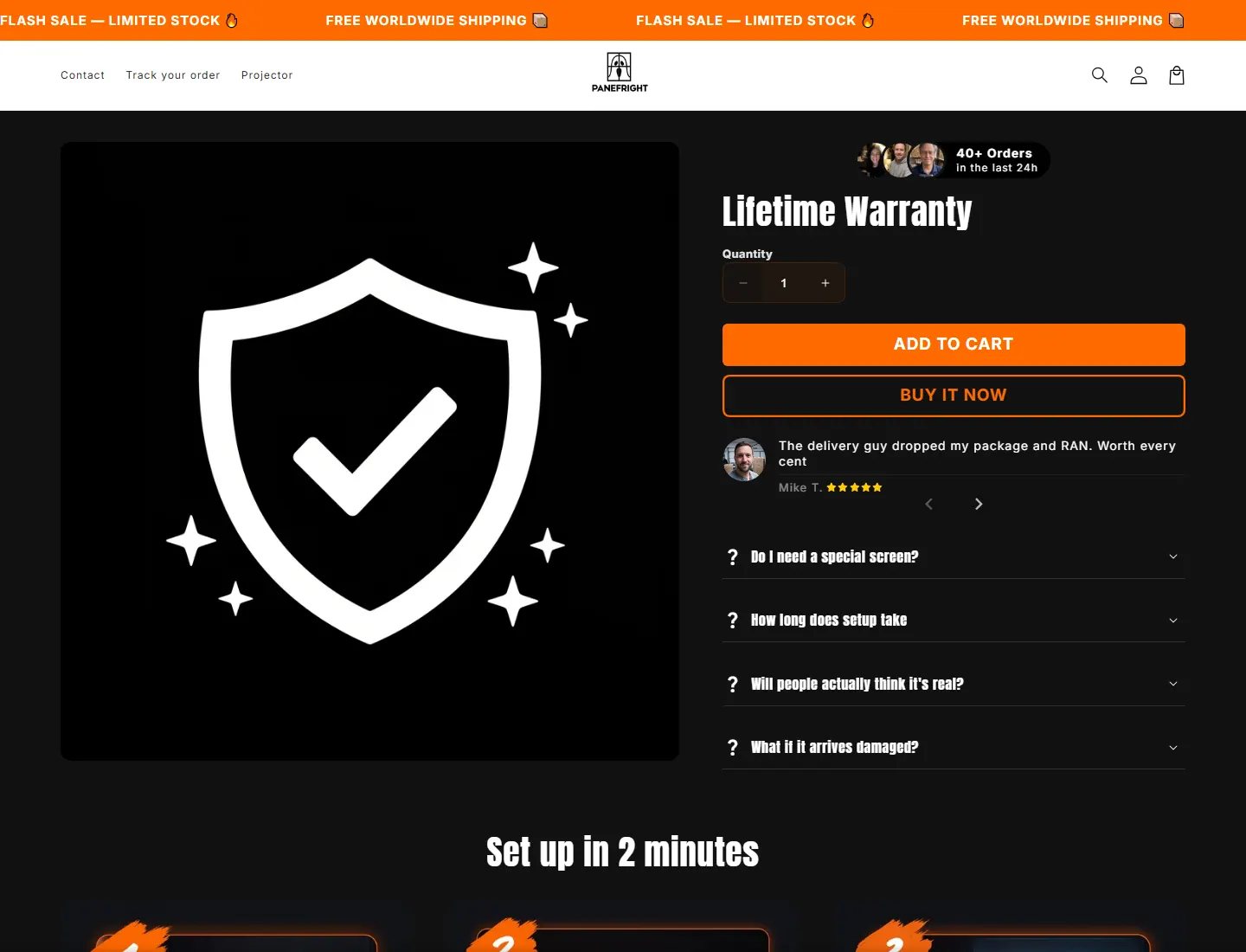
The warranty page creates another distinction buyers should notice. Its subject was labelled “Lifetime Warranty,” while the recorded wording says: “Every order is backed by our 30-day guarantee. If your projector arrives broken or stops working, you get a full replacement or refund.” These are different seller-displayed formulations recorded on the same page. The evidence does not explain whether “lifetime” applies to a separately purchased item, an extended plan or something narrower than the stated 30-day guarantee. We therefore do not treat the two terms as interchangeable.
Before payment, buyers should obtain a copy of the exact terms applying to their particular cart. Useful questions include when the 30-day period begins, who pays return postage, what evidence is required for a fault, whether a refund includes shipping charges, and what the “Lifetime Warranty” listing actually adds. None of those details is established by the supplied ledger.
Domain history is the clearest objective concern
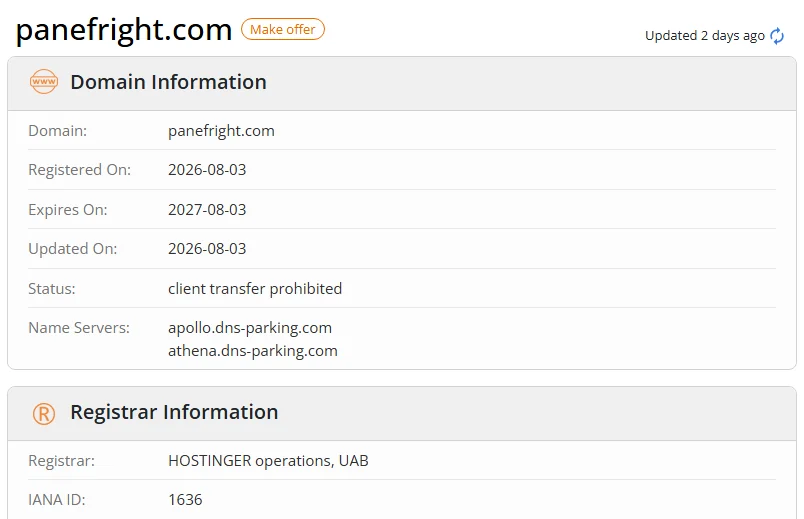
The WHOIS com record for panefright com shows a registration date of August 3, 2026, an expiry date of August 3, 2027, and HOSTINGER operations, UAB as registrar. It also lists apollo.dns-parking com and athena.dns-parking com as nameservers. Our evidence was retrieved on August 16, meaning the domain was approximately 13 days old at the time of review.
A one-year registration period is common and is not proof of misconduct. The registrar and nameservers likewise do not determine whether a seller will fulfil orders. The relevant issue is the absence of a meaningful domain track record: such a young website has had little time to accumulate independently verifiable order outcomes, long-term policy performance or a durable public reputation.
This timing makes promotional confidence harder to evaluate. A newly created store may be genuine, but shoppers have less historical evidence available if something goes wrong. Domain age should therefore be treated as one risk indicator within the broader transparency picture, not as a stand-alone verdict.
Business identity and contact transparency
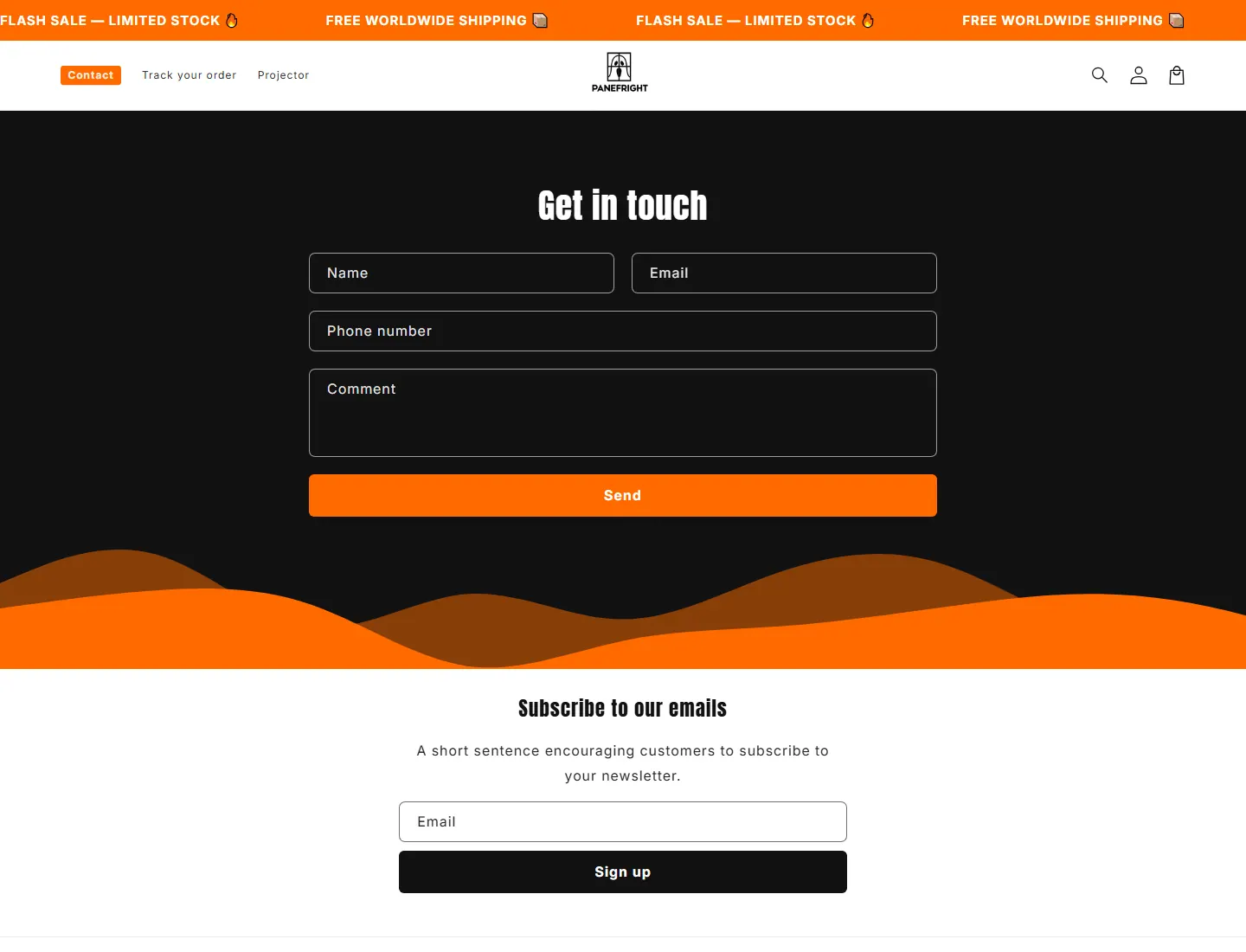
The collected contact page identifies the operator only as “PANEFRIGHT.” That establishes the name the website uses, but the ledger does not supply a separate legal entity name, named owner, telephone number or physical mailing address. We consequently cannot identify the legal operator or verify a business location from this evidence.
A branded contact page is a modest positive signal because it gives shoppers an on-site channel to look for. Yet a brand label alone is not equivalent to a registered-company identity. If an email address is displayed during checkout or in order correspondence, it should be understood as a contact channel, not automatically as proof of who legally operates the business.
Before ordering, a buyer could ask the seller for its legal business name, return destination and a clear escalation route for unresolved orders. Responses should be retained in writing. Our guide to identifying potentially unsafe websites provides a broader checklist for checking identity, policies and payment safeguards without assuming that any single missing detail settles the question.
Independent reputation checks were unavailable
Our reputation trail did not produce a usable independent customer score. Trustpilot access was blocked with HTTP 403, so no Trustpilot rating or review count can be reported. ScamAdviser and Scam Detector were also blocked with HTTP 403. The BBB check was unavailable because no reliable business match could be made from the URL alone, while the Find the Scam result was recorded as not found and not independently verified.
These outcomes must not be converted into positive or negative ratings. A blocked check means the material was unavailable to our collection process; it does not mean the service assigned PaneFright a poor score. Similarly, the absence of a reliable BBB match is not the same as a BBB warning or accreditation decision.
With no independently collected review history in the ledger, shoppers should be wary of treating testimonials displayed by the seller as equivalent to verified third-party feedback. This is also why our Margot & Ivy Greenville boutique investigation is relevant: unfamiliar storefronts require evidence beyond presentation, especially where operating history is limited.
Shipping, returns and payment protection remain unclear
The supplied evidence does not record a shipping policy, order-processing period, transit estimate, return address, accepted payment methods or chargeback instructions. We cannot responsibly fill those gaps by inference. In particular, there is no basis here to promise a delivery date or to describe the 30-day product guarantee as a general change-of-mind return policy.
Buyers should distinguish processing from transit when reviewing any terms at checkout. Processing is the period before dispatch; transit begins after the carrier receives the parcel. If PaneFright displays both elsewhere, each should be saved separately, along with the order confirmation and product description. The ledger does not contain either period.
Payment protection also depends on the method actually offered. Where possible, shoppers should favour a payment route that provides a documented dispute process and avoid irreversible transfers. The presence of a cart page shows that a checkout flow exists, but it does not by itself establish which protections apply. The product and cart claims should be screenshotted before payment because seasonal offers and displayed terms can change.
What looks positive and what remains concerning
Positive signals in the collected material include a coherent Halloween-projector theme, a browsable product collection, a cart and a contact page. The seller also states a defined 30-day remedy for a projector that arrives broken or stops working. These elements give a prospective buyer specific claims to preserve and test if an order is placed.
The concerns carry more weight at this early stage: the domain was registered only 13 days before collection; the contact evidence does not disclose a separate legal operator or location; the “Lifetime Warranty” label sits alongside narrower 30-day guarantee wording; and no usable independent reputation score was collected. Shipping, return logistics and payment protections are also unestablished in the ledger.
A domain or branding mismatch can be an additional issue at other stores, as explained in our Bose domain-mismatch review, but the present PaneFright evidence instead centres on newness and limited transparency. These warning signs do not conclusively prove that the website is a scam.
Practical assessment for prospective buyers
Our findings support caution rather than a definitive accusation. PaneFright has an identifiable range and recorded guarantee language, but the business is too new and too lightly documented in the supplied evidence to be treated as established. The most important unresolved questions concern the legal operator, returns destination, full warranty scope, fulfilment times and payment-dispute options.
A cautious shopper should confirm the total cost of any “free” or discounted promotion, request the return and warranty terms in durable form, check that the promised delivery window suits the seasonal use, and use a payment method with an accessible dispute mechanism. A small first order would limit exposure, although it would not remove the risk of delay or a difficult refund.
If the seller cannot answer basic identity, shipping or return questions clearly before purchase, postponing the order would be reasonable. If it supplies consistent details and later develops verifiable independent customer history, the assessment could change. This verdict reflects only the evidence collected on August 16, 2026.
Final Verdict
ZeroThought considers panefright com insufficiently established rather than proven fraudulent. The approximately 13-day-old domain, limited operator identification, unavailable independent reputation checks and unresolved policy details justify caution. The product catalogue and stated 30-day guarantee are useful seller claims, but buyers should not confuse them with verified fulfilment history or comprehensive warranty protection. These warning signs do not conclusively prove that the website is a scam.
Frequently Asked Questions
Is panefright com legit?
The available evidence is not sufficient to confirm PaneFright as an established retailer. It has product, cart and contact pages, but its domain was registered on August 3, 2026, and no usable independent reputation score was collected. Caution is appropriate, though those facts do not prove fraud.
How old is the PaneFright domain?
WHOIS com records panefright com as registered on August 3, 2026. It was approximately 13 days old when the evidence was retrieved on August 16, 2026.
Does PaneFright offer a lifetime warranty?
A seller page is titled “Lifetime Warranty,” but its recorded wording promises a 30-day guarantee for a projector that arrives broken or stops working. The evidence does not explain how the lifetime label relates to that 30-day remedy, so buyers should request the complete applicable terms.
Is the PaneFright projector really free?
The seller displayed a page titled “FREE HALLOWEEN PROJECTOR,” but the evidence does not contain its conditions, checkout total or any related purchase requirement. Confirm the entire transaction cost before relying on the word “free.”
Are there independent PaneFright ratings?
No usable independent score was collected. Trustpilot, ScamAdviser and Scam Detector were blocked during collection, the BBB check was unavailable without a reliable business match, and the Find the Scam result was not found and not independently verified. These results should not be interpreted as ratings.
What should buyers verify before ordering?
Buyers should verify the legal business identity, final promotional price, processing and transit periods, return destination, complete warranty terms and payment-dispute options. The supplied ledger establishes a cart and a limited product-fault guarantee but does not establish the other details.@Deep Research