Willis Judd is an online retail store operating under the domain willisjudd com, specializing in jewelry and fashion accessories most notably copper magnetic bracelets marketed for wellness and style. At first glance, the site appears professional, but a closer look raises several questions that any cautious shopper should consider before spending their money.
In an era where online shopping scams are surging globally, it’s more important than ever to verify a website’s credibility before entering your payment details. This in-depth review of willisjudd com examines every major trust signal from domain registration and SSL certificates to customer complaints and social media presence to give you a clear, unbiased answer: is Willis Judd a legitimate store, or is it a scam designed to take your money?
We’ve analyzed WHOIS data, trust scores, return policies, payment methods, product authenticity, and real customer feedback. Whether you’ve already placed an order or are still considering one, this 2026 review will help you make an informed decision.
Section 1: WHOIS Data & Domain Age
What Does the Domain History of willisjudd com Tell Us?
One of the first steps in evaluating any online store is checking its WHOIS registration data. For willisjudd com, publicly available WHOIS records show the domain was registered on April 14, 2017 making it approximately nine years old at the time of this writing in 2026. On the surface, this might seem reassuring, since many short-lived scam sites pop up and disappear within months or a year.
However, domain age alone is not a definitive indicator of legitimacy. A domain can be registered years in advance, sit dormant, and then be repurposed for fraudulent activity. It can also be transferred between owners without the average consumer knowing. What matters equally is the consistency of ownership, the hosting country, and the transparency of WHOIS data.
In the case of willisjudd com, WHOIS data reveals that ownership details are partially obscured through privacy protection services — a common but notable red flag. While privacy protection is not illegal and is used by some legitimate businesses, it does prevent consumers from independently verifying who is actually behind the website. The listed physical address — Daniel Roy Studio 11, Corby Enterprise Centre, Studio 11, London Road, Corby, Northamptonshire, England, NN17 5EU — sounds credible, but a business address registered at a shared enterprise centre (essentially a co-working space) does not guarantee a stable, independently operating retail business.
The registrar information and hosting location should also be verified. Sites hosted in regions with weak consumer protection laws or through low-cost anonymous hosting providers are inherently riskier. While these facts alone don’t confirm a scam, they do mean you should apply additional scrutiny before purchasing from willisjudd com.
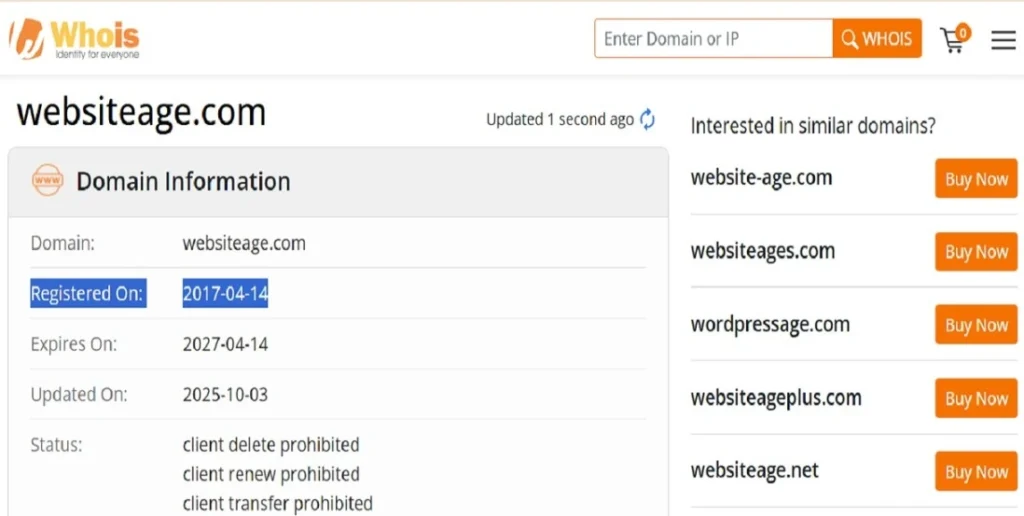
Bottom line on domain data: The nine-year-old domain is a mild positive signal, but obscured ownership, a shared enterprise address, and lack of transparent operator details introduce meaningful doubt.
Section 2: Trust Score & Reputation
How Does willisjudd com Score on Scam-Detection Tools?
Trust scores from third-party scam analysis platforms like Scamadviser, Web of Trust (WOT), and similar tools are a critical part of any website review. According to the data available for willisjudd com, the site reportedly holds a trust score of 100% on at least one such platform — a figure that sounds reassuring but deserves a closer examination.
A perfect trust score can sometimes be the result of automated algorithmic assessment rather than actual human verification or customer feedback analysis. Several factors that these algorithms weigh include SSL certificate presence, domain age, and blacklist status. Willis Judd checks some of these boxes, which may explain the high algorithmic score. However, algorithm-based scores do not account for the quality of customer service, accuracy of product descriptions, or the reality of the return process.
Crucially, despite the algorithmic score, real customer reviews paint a more complicated picture. Reports on external platforms mention delivery delays, product quality concerns, ring sizing issues, return and refund processing delays, and customization errors on personalized items. These are not the hallmarks of a business that earns a genuine 100% satisfaction rating.
When comparing Willis Judd to established, verifiable jewelry retailers, the gap becomes more obvious. Trusted sites typically have robust customer service channels, independently verifiable addresses, phone support, and hundreds of verified reviews across multiple platforms. Willis Judd’s profile is considerably thinner.
No major blacklisting on cybersecurity databases appears to be recorded at the time of writing, which is a positive sign. But the absence of blacklisting is a baseline expectation, not a badge of trustworthiness.
Section 3: Product Information & Images
Are Willis Judd’s Products Genuine and Accurately Described?
Willis Judd’s core product offering centers around copper magnetic bracelets, along with a limited selection of other jewelry and fashion accessories. The store carries a relatively narrow catalog — reportedly around 20 to 30 products — which is quite minimal for a professional e-commerce brand claiming years of operation.
Product descriptions tend to lean into wellness and lifestyle marketing, suggesting health benefits from copper and magnetic therapy. It is worth noting that health benefit claims associated with magnetic or copper bracelets are not scientifically substantiated and are often used as persuasive marketing hooks rather than verified facts. This type of claim is common on low-credibility retail sites and should be treated with healthy skepticism.
A reverse image search of product photos used on willisjudd com can reveal whether images are original or sourced from stock photo libraries, supplier catalogs, or other websites. When product images are not proprietary — meaning the same photos appear on multiple unrelated retailers — it raises the question of whether the seller actually holds the stock they claim to sell or is acting as a dropshipper with limited quality control.
The limited product range is also a red flag worth noting. Legitimate specialty retailers that have operated for nearly a decade typically develop and expand their catalog. A site with under 30 products after nine years of supposed operation suggests either very low investment in the business, irregular operations, or a site that has changed hands or purpose over time.
Takeaway: Product descriptions make unverifiable wellness claims, the catalog is unusually thin for a long-running retailer, and image authenticity should be independently verified before purchasing.
Section 4: Return Policy & Customer Service
How Easy Is It to Get a Refund or Reach Willis Judd?
Willis Judd lists a 30-day return policy on its website. On paper, this is a reasonable and standard consumer protection offering. However, the real-world experience of exercising that return policy is a different story, according to customer complaints.
Several reported issues include return and refund processing delays, suggesting that even when customers follow the correct process, getting their money back is not straightforward. Additionally, there are reported discrepancies between the return timeframe advertised on the main product pages and the terms stated in the dedicated return/cancellation section — a discrepancy that is an immediate red flag and could be used to deny legitimate refund claims.
On the customer service front, the situation is concerning:
- Email address: Not publicly provided on the site.
- Contact phone number: Not found or listed.
- Physical address: A shared enterprise centre in Northamptonshire, England.
The absence of a direct email address or phone number for customer support is a serious problem. Legitimate e-commerce businesses — even small ones — provide at minimum an email address for order inquiries and support. When a customer has a problem with an order and cannot reach the seller, their only recourse is a credit card chargeback or PayPal dispute, which is time-consuming and not always successful.
The shared enterprise address, while a real location, does not give consumers reliable access to a physical business. Enterprise centres are essentially mail forwarding and hot-desk facilities — not retail or distribution operations.
Section 5: Payment Methods & Security
Is Your Financial Information Safe on willisjudd com?
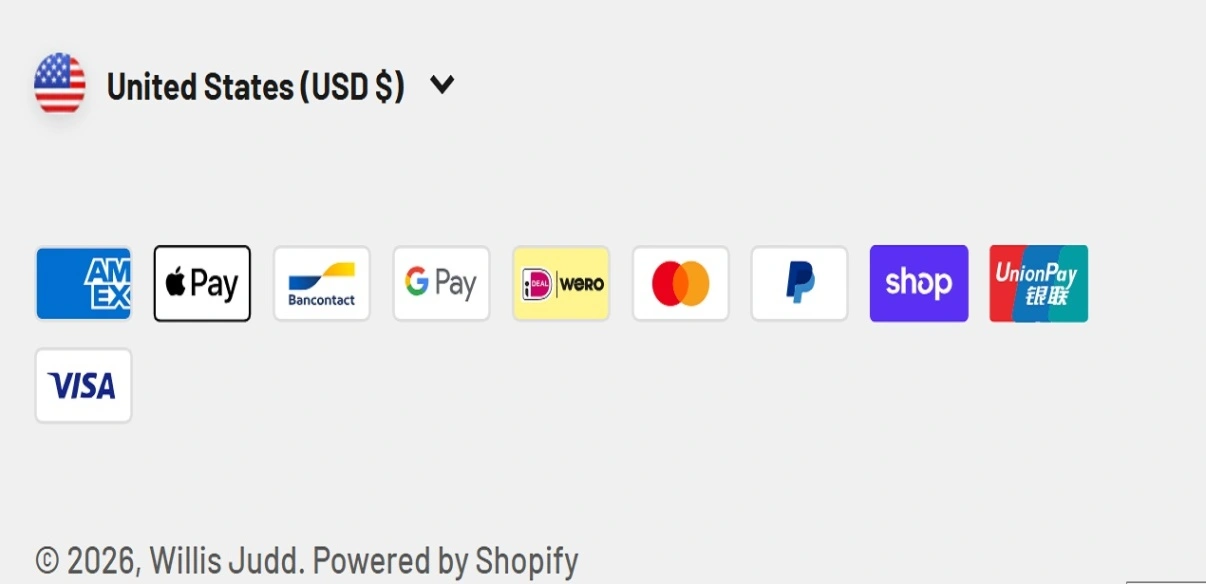
On the positive side, Willis Judd does offer a relatively broad range of payment options: Visa, Mastercard, American Express, Maestro, PayPal, Apple Pay, Google Pay, and Shop Pay. This is actually one of the stronger indicators in the site’s favor. Scam sites operating for quick financial theft typically accept only wire transfers, cryptocurrency, or a single unprotected card gateway — methods that offer little to no consumer recourse.
The presence of PayPal in particular is significant for consumers. PayPal’s buyer protection program gives shoppers a meaningful avenue for disputing transactions and recovering funds if goods are not delivered or do not match their description. If you decide to purchase from willisjudd com despite the concerns raised in this review, using PayPal or a credit card with strong chargeback protections is strongly advisable.
The site also reportedly holds a valid SSL certificate, indicated by HTTPS in the browser address bar. This means that data transmitted between your browser and the website is encrypted. However, SSL certificates are freely and easily obtainable and are no longer a reliable indicator of a site’s overall trustworthiness — they only protect data in transit, not the integrity of the business itself.
No specific reports of credit card data theft or phishing from willisjudd com have surfaced in publicly available databases at the time of this review, but consumers should remain cautious, especially given the limited customer service infrastructure.
Section 6: Website Design & Technical Footprint
What Does the Technical Side of willisjudd com Reveal?
A website’s design and technical execution can reveal a lot about the legitimacy and professionalism of the business behind it. Willis Judd presents a reasonably functional storefront — it is not the kind of obviously broken, typo-riddled site that screams scam at first glance. However, deeper inspection reveals several concerns.
The product catalog is notably sparse, with fewer than 30 items for a store that has supposedly been operational since 2017. A nine-year-old jewelry brand with authentic sales volume should have a much more developed product range, more detailed product pages, and richer brand storytelling.
The website uses what appears to be a standard Shopify or similar platform template, which is not in itself a red flag — many legitimate small businesses use Shopify — but combined with minimal original content, it suggests a low level of investment in the brand’s digital presence.
There are also inconsistencies in the return policy language across different pages of the site, which may indicate that content was added hastily, copied from templates, or not carefully maintained. Legitimate businesses with serious customer service operations tend to maintain consistent, legally reviewed policy language across all pages.
Checking for broken links, outdated pages, or hidden subdomains is also worthwhile. Sites with orphaned pages or inconsistently updated sections often signal either neglect or a site that has changed purpose over time.
Section 7: Social Media & Online Presence
Is Willis Judd Active and Authentic on Social Media?
Willis Judd lists social media profiles on Facebook, Instagram, Pinterest, and YouTube. Having a multi-platform social presence is generally a positive indicator — it suggests a brand that invests in community building and customer engagement.
However, the key questions to ask are: How active are these accounts? How many genuine followers do they have? Is there authentic engagement in the form of real comments and conversations?
Social media accounts can be purchased with fake followers or created to appear legitimate while receiving minimal genuine attention. A YouTube channel with few or no videos, an Instagram account with stock-looking product photos and generic captions, or a Facebook page with no real customer interaction are all warning signs.
Customer reports of negative reviews on social media for Willis Judd suggest that the brand’s social media presence has not translated into a reliably positive customer experience. Critically, how a business responds to negative feedback on social media is one of the clearest indicators of its customer service culture. Brands that ignore complaints, delete negative comments, or respond defensively rather than constructively are businesses that do not prioritize their customers.
Without independently verifying each social media account’s activity levels and engagement authenticity, consumers should not take the mere presence of social links as a guarantee of legitimacy.
Section 8: Customer Reviews & Testimonials
What Are Real Customers Saying About Willis Judd?
Customer reviews are among the most valuable data points in any website investigation. For Willis Judd, the picture that emerges from reported customer feedback is mixed to negative.
Documented customer complaints include:
- Delivery delays beyond the stated 2–15 business day window
- Product quality concerns, particularly regarding the durability and finish of copper bracelets
- Ring sizing issues, suggesting either inaccurate size guides or inconsistent manufacturing
- Return and refund processing delays, with some customers struggling to complete the return process within the stated policy window
- Customization errors on personalized items — a serious problem when customers pay a premium for a product with specific engravings or personalizations
On platforms like Trustpilot and SiteJabber, review profiles for niche jewelry sites like Willis Judd often show a bimodal distribution — either very positive reviews (which can be incentivized or fabricated) or very negative ones (which tend to be genuine, since unhappy customers are more motivated to leave reviews). This pattern makes it difficult to assess the true average customer experience.
Testimonials displayed on the Willis Judd website itself should be treated with caution, as on-site testimonials are curated by the seller and cannot be independently verified.
Section 9: Additional Red Flags
Are There Other Warning Signs Worth Noting?
Beyond the individual sections analyzed above, several additional red flags deserve attention when evaluating willisjudd com:
1. Unusually High Discount Offers: The site reportedly offers discounts of up to 60%. While seasonal sales are normal, perpetually high discounts — especially on small-catalog specialty goods — are a common tactic used to create urgency and encourage impulse purchases before customers have time to research the seller.
2. No Direct Email or Phone Contact: The complete absence of a direct customer service email or phone number is highly unusual for a legitimate retailer and significantly increases the risk for buyers who encounter problems.
3. Wellness Claims Without Evidence: Copper bracelet health claims are not scientifically supported and are a commonly used marketing tactic on low-credibility stores.
4. Inconsistent Policy Language: Discrepancies between return policy terms in different sections of the site are a yellow flag that suggests either poor site maintenance or deliberate ambiguity designed to complicate refund requests.
5. Shared Enterprise Address: While not definitively fraudulent, a co-working space address is not the same as an independently verifiable warehouse or retail facility.
6. Sparse Product Catalog for a Nine-Year-Old Site: Genuine growth and customer demand over nine years should produce a more developed catalog.
Section 10: Expert Verdict
Is Willis Judd a Scam or a Legitimate Website?
Based on this comprehensive investigation, Willis Judd occupies a gray zone between borderline-legitimate and high-risk. It is not the most obvious type of scam site — it does not disappear overnight, it does not exclusively accept cryptocurrency, and it has been online for nearly a decade. These are meaningful distinctions.
However, the accumulation of red flags — no direct customer contact email or phone, a shared enterprise address, a thin product catalog, inconsistent return policy terms, reported delivery and refund delays, unverifiable wellness product claims, and mixed-to-negative real customer feedback — paints the picture of a business that operates below the standard of a trustworthy retailer.
Our recommendation: Exercise significant caution. If you choose to purchase from willisjudd com, use PayPal or a credit card for maximum buyer protection, take screenshots of every page of your order, and be prepared for a potentially difficult refund process if something goes wrong. Ideally, source copper bracelets or jewelry from established retailers with verifiable customer service, published contact information, and independently verified reviews.
We do not classify Willis Judd as a definitive scam, but we cannot recommend it as a trustworthy shopping destination given the evidence available. You can read more about ShapeOil Review 2026: Is shapeoil com a Scam or Legit? Full Investigation.
Section 11: Frequently Asked Questions (FAQ)
Is this website safe to buy from?
Based on our investigation, willisjudd com carries several risk factors that make it difficult to recommend with confidence. While the site has been online since 2017 and offers well-known payment methods including PayPal, there is no publicly available direct customer service email or phone number, reported delays in delivery and refunds, and inconsistencies in policy language. If you choose to buy, use a payment method with strong buyer protection — PayPal or a credit card — and document your order thoroughly.
How can I check if a site is a scam?
Several free tools can help you independently assess a website’s legitimacy. Scamadviser and Web of Trust (WOT) provide automated trust scores. WHOIS lookup tools (such as whois.domaintools.com) show domain registration details and age. Searching the brand name plus “review,” “scam,” or “complaint” on Google, Trustpilot, and Reddit will surface real user experiences. Also check whether the site has verifiable contact information, a transparent return policy, and an independently verifiable physical address.
What should I do if I already ordered from this site?
If you have already placed an order with Willis Judd and are experiencing problems, take the following steps: First, check your order confirmation email for any tracking information. If goods have not arrived within the stated delivery window, file a dispute with your payment provider immediately — PayPal disputes must typically be opened within 180 days of payment, while credit card chargebacks have their own timelines (usually 60–120 days). Document all communications, screenshots of your order, and the product listing as it appeared at the time of purchase.
Can I get my money back if I was scammed?
If you paid via PayPal, you have strong buyer protection and can file a “Item Not Received” or “Significantly Not as Described” claim. If you paid by credit card, contact your bank’s fraud or disputes department and request a chargeback. If you paid by bank transfer or cryptocurrency, recovery is significantly harder and may require reporting to consumer protection authorities in your country. In the UK, Action Fraud (actionfraud.police.uk) is the relevant reporting body. In India, the Cyber Crime Portal (cybercrime.gov.in) handles online fraud reports.
How do scam websites trick people?
Scam websites use a range of psychological tactics: deep discounts that create urgency, professional-looking designs that borrow credibility from legitimate brands, fake testimonials and inflated trust scores, social media accounts with purchased followers, wellness claims that appeal to consumer desires, and vague or contradictory policy language that makes refunds difficult. Many also use legitimate-sounding business addresses (such as enterprise centres or coworking spaces) and standard SSL certificates to appear credible at first glance.
What are the warning signs of fake online stores?
Key warning signs include: no publicly listed customer service email or phone number; a physical address at a shared coworking or enterprise centre; an unusually thin product catalog; discounts consistently above 50%; wellness or miracle claims without scientific backing; discrepancies between policy terms on different pages; minimal or overly positive on-site testimonials; social media accounts with low engagement relative to follower counts; and no independently verifiable reviews on third-party platforms like Trustpilot.
Which trusted sites can I use instead?
For copper bracelets and jewelry, consider purchasing from well-established retailers such as Amazon (with verified seller ratings and Amazon’s own return guarantee), Etsy (for handcrafted items from verified independent sellers with transparent reviews), John Lewis or M&S in the UK for fashion accessories, or specialty wellness retailers with robust customer service infrastructure. Always prioritize retailers with verifiable contact information, clear and consistent return policies, and hundreds of independently verified customer reviews.
This review is based on publicly available information, reported customer feedback, and analysis of website characteristics as of 2026. Readers are encouraged to conduct their own research before making any purchasing decision.